I love a clean fridge and hate food waste. Pizza is a great way to gather up the fragments of things and use them up in a tasty way. About one weekend a month, I make a little buffet of pizzas for an at-home movie night, and the leftovers never last long. This recipe is fast, tasty, and has a great texture: makes 3 14″ round pizzas or two half-sheet pans.
4-4 1/2 cups of bread flour (you can use all-purpose in a pinch, but its much better with more gluten. If you don’t like keeping two kinds of flour on-hand, consider getting extra gluten for recipes like this. I’ve linked my favorite below
4 1/2 teaspoons instant yeast (two packets)
2 1/4 teaspoons sugar
1 1/2 teaspoons salt
4 Tablespoons olive oil, plus extra for the pans and while the dough rises
1 1/2 cups warm water, about 105 degrees Farenheit. Too hot will kill your yeast, while a little cool may just take longer
2-3 teaspoons herbs (Optional: garlic powder, italian seasoning, basil. My absolute favorite is a packet of Italian salad dressing mix — its bonkers delicious)
Mix water, yeast, oil, seasoning and sugar in the bowl of a mixer with your dough hook (or if you want an arm workout, a regular bowl). Mix until the yeast is all coated in water.
Add flour cup by cup, mixing well as you go. Depending on how humid it is that day in your kitchen, the amount you need will vary. HEADS UP: I didn’t know this until I burned out a KitchenAid (which was thankfully still under warranty). KitchenAids are only supposed to mix doughs like this at level 2 — “not stir, not 4” according to the great guy from their service team who explained this to me.
Knead well until the dough starts to get cute: it will become a cohesive ball that looks smooth on the outside and cleans the sides of the bowl. When it looks like a delightful little bubble, coat it and the inside of the bowl with olive oil and put a clean dishtowel over the top of the bowl.
Let it rise for about 30 minutes or until it is doubled in size. This is when I preheat my oven to 500 degrees Farenheit, put a little oil on each pan (you can use cornmeal as well, but I don’t always have that on hand), and prep the ingredients I’ll be using.
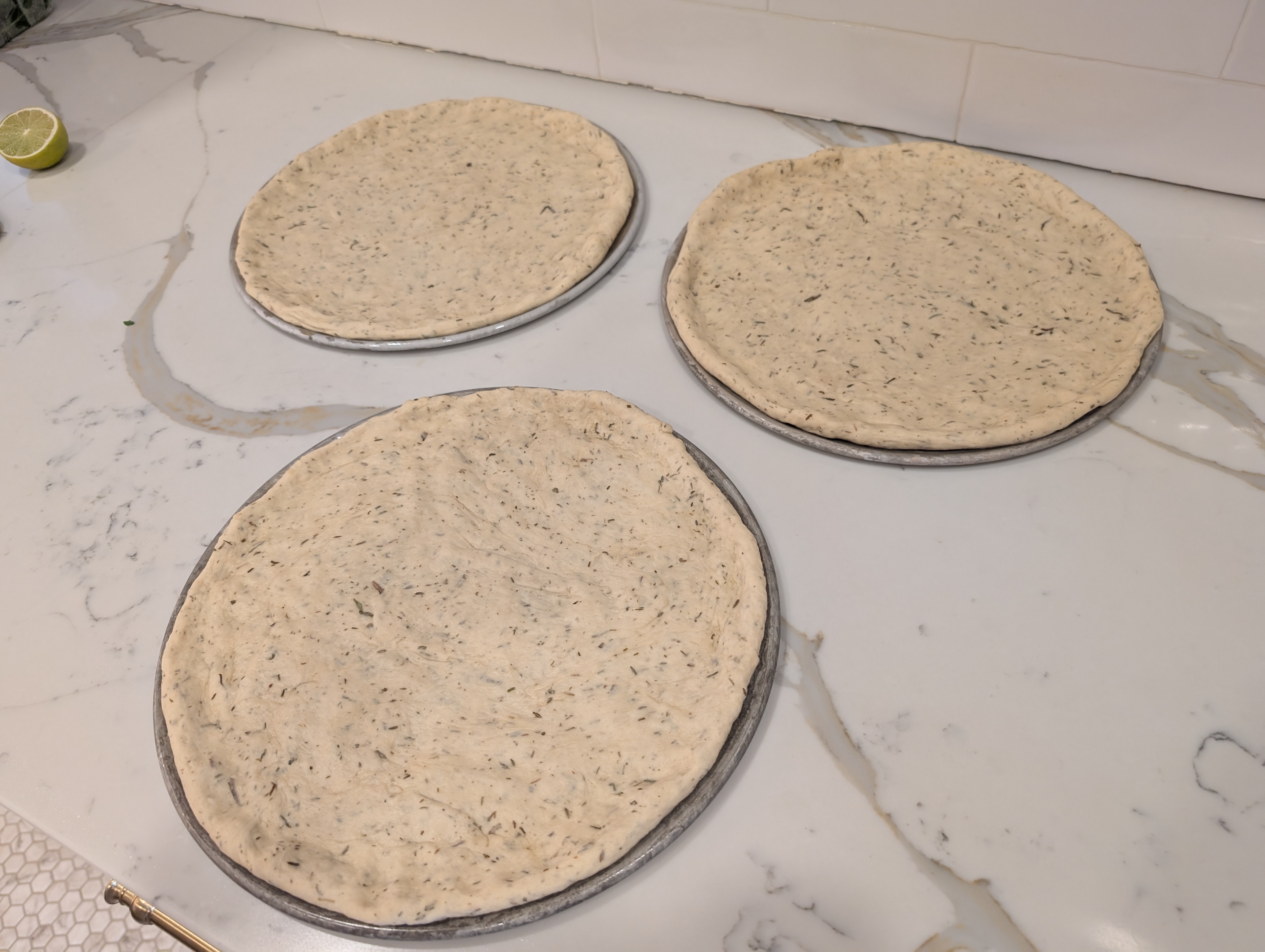
Pizza dough is better stretched than rolled. When your dough is ready, split into 3 balls for round pizzas and shape each piece into a thick disc. Using the pads of your fingers, starting in the middle (like where a bagel’s hole would be), turn the dough as you lightly press the dough thinner and toward the outside of the disc. As it gets bigger, let gravity do the work: rotate it while it hangs to get a thin, even round. Place it on the prepared pans when its about 12″ around, then (still using the pads of your fingers to avoid punching holes through the dough), work the edges out to meet the edge of the pan. You don’t need to roll the edges up to get a nice crust, just whatever little bit of extra is there will be perfect.
Making Pizzas
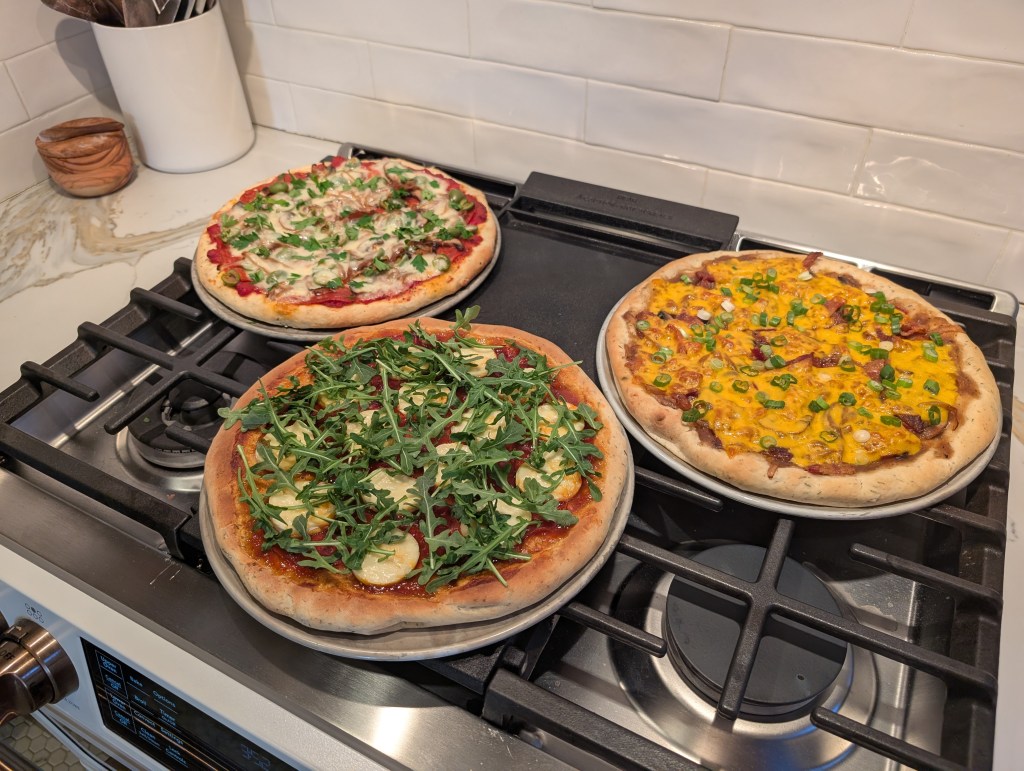
When topping pizzas, less is more and dryer is better. I recommend cooking veggies before you put them on, because they can release extra water in the oven and make a kiddie pool on top of an otherwise beautiful homemade pie (no thanks). Start with less sauce than you think, you can always dip in more afterwards. Fresh garnishes after pizza and a drizzle of good olive oil really make a difference. I’ve listed the ingredients I used in the photo below, but I’ve rarely (ever?) met a pizza I didn’t like, so long as the crust was respectable.
Bake for ~20 minutes, turning as needed, until they are golden around the edges.
Pro tip: these are GREAT for meal prepping. Just slightly under bake (~15 minutes, until the dough is firm enough to lift but not brown) and let cool, then wrap well in Saran Wrap and freeze these. Re-bake straight from the freezer at 400 for about 20 minutes or until golden for a quick weeknight dinner later in the week.
The pizza in the back left of the photo above is the classic for the night: tomato sauce, capicola, bell peppers, green olives, mushrooms, and mozzarella (with fresh parsley garnish after baking). The one in the center is bougie and a little sweet: a honey tomato butter that I canned at-home last year — you could use apple butter — with capicola, brie and caramelized onions (garnished with arugula after baking). The one on the right is a riff on baked potatoes: chicken gravy as a base sauce, with bacon, caramelized onions, mushrooms and cheddar cheese (topped with scallions after baking).
King Arthur Flour Vital Wheat Gluten can be found here.
 Thea's little kitchen
Leave a comment